14 min read
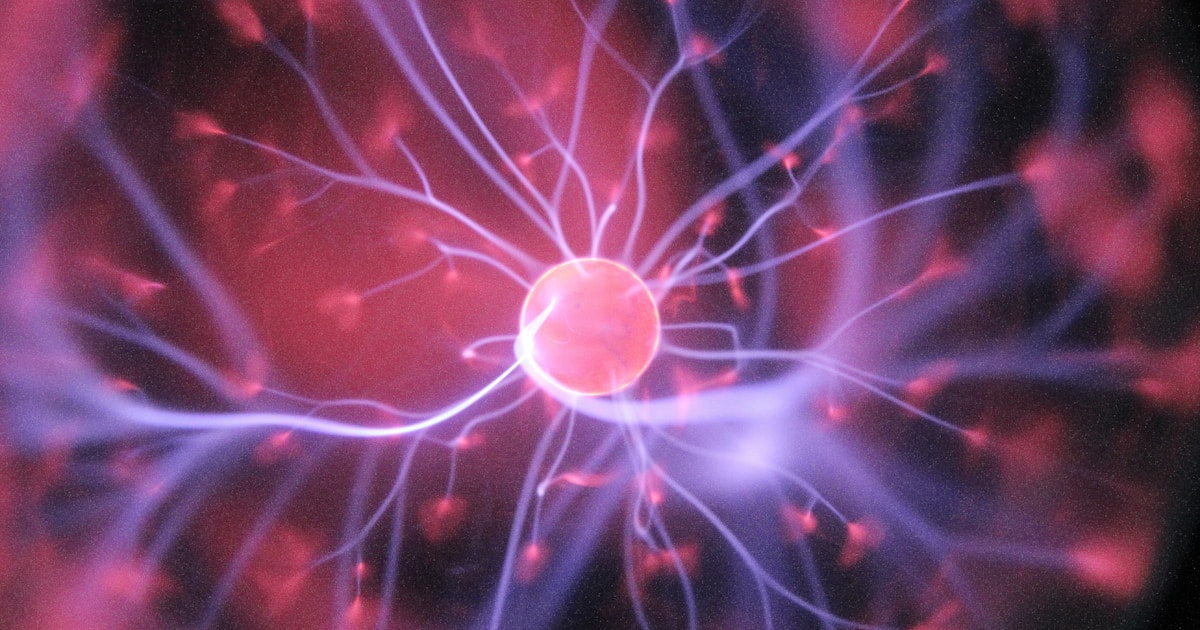
Active recall isn’t just a “study tip” — it’s a fundamental principle of how human memory works, supported by over 100 years of research in cognitive psychology and neuroscience. Understanding the science behind it doesn’t just convince you to use it; it helps you use it more effectively. And when you see why it works at the neural level, you’ll understand why AI is the ideal tool for implementing it at scale.
The Neuroscience of Memory Formation
Encoding, Storage, and Retrieval
Memory formation involves three distinct processes, each governed by different neural mechanisms:
Encoding: Initial processing of new information — what happens when you first learn something in lecture or while reading. Encoding involves converting sensory input into neural representations in the hippocampus and surrounding medial temporal lobe structures.
Storage: Maintaining the encoded information over time — the memory trace. During storage, memories gradually consolidate from hippocampal-dependent representations to distributed cortical networks, a process that unfolds over days to weeks and is facilitated by sleep.
Retrieval: Accessing stored information when you need it — what exams test. Retrieval involves reactivating the neural pattern associated with the original encoding, coordinated by prefrontal cortex regions that direct the search process.
Here’s the critical insight that most students miss: most study methods only strengthen encoding. Rereading, highlighting, and summarizing all focus on processing information more thoroughly during the encoding phase. But exam performance depends on retrieval — and retrieval is a separate cognitive skill that must be practiced independently. According to research published in Trends in Cognitive Sciences by Karpicke (2012), the act of retrieval itself modifies and strengthens memory traces in ways that additional encoding activities cannot replicate.
Active recall directly practices retrieval, making it the most targeted study technique for exam preparation.
Long-Term Potentiation
At the neural level, learning involves strengthening connections between neurons through a process called long-term potentiation (LTP). When two neurons fire together repeatedly, the synaptic connection between them becomes stronger and more efficient. This is the cellular basis of the maxim “neurons that fire together, wire together,” first articulated by Donald Hebb in 1949.
Active recall triggers LTP more effectively than passive review because retrieval activates the specific neural pathways you need during an exam. Rereading activates perceptual processing pathways (recognizing familiar text), but retrieval activates the same pathways that will be engaged during testing. This overlap between practice and performance conditions is a key mechanism explaining why testing is superior to restudy.
Neuroimaging studies using fMRI have confirmed this distinction. When students passively reread material, brain activity is concentrated in visual and language processing areas. When they actively retrieve the same information, activity shifts to prefrontal and medial temporal regions — the same networks engaged during exam performance. This neural alignment between study and test is what makes active recall so powerful.
Memory Consolidation and Sleep
Memory consolidation — the process by which short-term memories become stable long-term memories — occurs primarily during sleep, particularly during slow-wave sleep and REM sleep stages. Research from Nature Reviews Neuroscience has shown that memories that have been recently retrieved are preferentially consolidated during subsequent sleep. This means that practicing active recall before sleep can enhance overnight memory consolidation, producing stronger memories the next day than either recall or sleep alone would produce.
This finding has practical implications: scheduling active recall sessions in the evening, followed by adequate sleep, may be the optimal timing strategy for memory consolidation.
The Testing Effect: A Century of Evidence
The testing effect — the finding that retrieval practice enhances long-term retention — was first documented by Arthur Gates in 1917 at Columbia University. Over the following century, it has become one of the most replicated and robust findings in all of cognitive psychology.
Key Studies
Roediger & Karpicke (2006): In this landmark study published in Psychological Science, students who studied material once and then tested themselves three times retained 61% after one week, versus 40% for students who studied four times without testing. Testing triumphed despite less total study time with the material. This study was pivotal because it demonstrated that the testing effect wasn’t just about identifying knowledge gaps — the act of retrieval itself strengthened memory.
Karpicke & Blunt (2011): Published in Science, this study showed that retrieval practice produced better performance than elaborate concept mapping — even on tests requiring complex inferences and connections between ideas. This demolished the criticism that active recall only helps with “rote memorization” of facts. Students who practiced retrieval demonstrated superior understanding, not just superior recall.
Rowland (2014): A comprehensive meta-analysis published in Educational Psychology Review synthesizing 159 studies found a robust testing effect across virtually all experimental conditions — different ages, materials, test formats, and retention intervals. The effect size was substantial (d = 0.50) and remarkably consistent, leading Rowland to conclude that the testing effect is one of the most generalizable findings in educational psychology.
Adesope et al. (2017): Another meta-analysis published in Review of Educational Research confirmed that practice testing enhances learning for both factual and conceptual knowledge, with particularly strong effects for meaningful learning tasks. The analysis included 272 independent comparisons across 118 studies, providing overwhelming statistical evidence for the testing effect.
Yang et al. (2021): A more recent study published in Psychological Bulletin extended the evidence by showing that the testing effect persists across diverse real-world educational settings, not just controlled laboratory conditions. Students in actual classrooms who used retrieval practice outperformed those who used traditional study methods.
Why Retrieval Works: Five Mechanisms
1. Elaborative Retrieval
When you retrieve a fact, you don’t just pull up that isolated piece of information. Your brain activates the entire semantic network surrounding it — related concepts, contexts, connections, and associated experiences. This “elaborative retrieval” strengthens multiple memory traces simultaneously, creating a richer, more interconnected web of knowledge. Each successful retrieval adds new contextual details to the memory, making it more distinctive and easier to access in the future.
2. Transfer-Appropriate Processing
The principle of transfer-appropriate processing, established by Morris, Bransford, and Franks in 1977, states that learning is most effective when study activities match the conditions of testing. Since exams require retrieval, practicing retrieval during study is the most direct preparation. You’re essentially rehearsing the exact cognitive operation the exam will demand. This is analogous to why athletes practice game-like scenarios rather than just drilling isolated skills.
3. Metacognitive Monitoring
Active recall gives you accurate feedback about what you actually know versus what you think you know. Passive review creates an “illusion of competence” — everything looks familiar when it’s in front of you, leading you to believe you’ve mastered material you can’t actually recall independently. Research by Dunlosky & Rawson (2012) in Metacognition and Learning has shown that this illusion is one of the primary reasons students study ineffectively — they stop studying too soon because they mistakenly believe they know the material.
Retrieval practice exposes genuine knowledge gaps. When you can’t recall a concept, you immediately know where to focus your efforts. This metacognitive accuracy is invaluable for efficient studying.
4. Memory Reconsolidation
Each time a memory is retrieved, it enters a temporary unstable state and must be reconsolidated — essentially re-stored in memory. This reconsolidation process can actually strengthen and update the memory, incorporating new connections, contexts, and understanding that have developed since the original encoding. It’s as if retrieval gives you the opportunity to “save” an improved version of the memory.
5. Retrieval-Induced Facilitation
Successfully retrieving one piece of information can facilitate the retrieval of related information. When you recall a key concept from Chapter 3, related concepts from that chapter become more accessible as well. Practicing recall of key concepts creates “retrieval routes” that make it easier to access entire networks of related knowledge during an exam.
How AI Optimizes Active Recall
Understanding the science reveals why AI study platforms are such effective vehicles for active recall. Each mechanism described above can be enhanced through intelligent technology:
Unlimited Question Generation
The testing effect is strongest with varied retrieval practice — testing the same concept from different angles and contexts. AI platforms like Notova generate unlimited questions in multiple formats (multiple choice, free response, application-based, true/false), preventing the common problem of memorizing specific questions rather than learning underlying concepts. When you’ve seen the same concept questioned in ten different ways, your understanding becomes flexible and robust.
Immediate, Detailed Feedback
Research consistently shows that feedback enhances the testing effect significantly. The sooner feedback arrives after a retrieval attempt, the more effective it is. AI-generated quizzes provide instant explanations for every answer — not just whether you were right or wrong, but why the correct answer is correct and why each incorrect option is wrong. This immediate elaborative feedback triggers the reconsolidation and elaborative retrieval mechanisms described above.
Adaptive Difficulty
The testing effect is maximized when retrieval is challenging but achievable — what Robert Bjork calls “desirable difficulty.” If questions are too easy, retrieval is effortless and produces minimal learning. If questions are too hard, retrieval fails entirely and no strengthening occurs. AI platforms adapt to your performance in real time, ensuring questions hit the sweet spot of difficulty for your current knowledge level. This dynamic calibration is something no textbook or static quiz can provide.
Comprehensive Coverage
When creating questions manually, students tend to test themselves on what they find interesting or already know — a phenomenon called “study bias.” AI analyzes all of your course materials and generates questions covering the full breadth of content, ensuring no topic is neglected. This systematic coverage prevents the common exam surprise of encountering questions on material you didn’t think to review.
Integration with Spaced Repetition
Active recall combined with spaced repetition is the most powerful combination in learning science. Research by Cepeda et al. in Psychonomic Bulletin & Review demonstrated that spacing retrieval practice over time produces dramatically stronger long-term retention than massed practice. AI platforms implement both automatically — scheduling retrieval practice at optimal intervals based on your individual performance history. Items you’re struggling with appear more frequently; items you’ve mastered appear at longer intervals to maintain knowledge with minimal effort.
Personalization to Course Materials
Generic quiz apps test you on standardized content that may not match your professor’s emphasis, terminology, or exam format. Notova generates questions from your actual uploaded course materials — the same slides, textbook chapters, and notes your exams will cover. This alignment between study materials and exam content maximizes transfer-appropriate processing.
Putting the Science Into Practice
You don’t need to understand all the neuroscience to benefit from active recall. Here’s the practical takeaway, distilled from the research:
After learning new material, test yourself immediately — even a brief 5-minute quiz strengthens initial encoding and identifies gaps early
Use varied question formats — don’t just use one type of flashcard or quiz; mix multiple choice, short answer, and application questions
Embrace the struggle — difficulty during retrieval is a signal that learning is happening, not a sign that you’re failing
Review explanations for wrong answers thoroughly — this is where the deepest learning occurs through reconsolidation and elaborative processing
Space your practice over days and weeks — don’t cram retrieval into a single session; distribute it for maximum long-term retention
Test yourself before you feel ready — premature testing (when you still feel uncertain) produces stronger learning than waiting until material feels comfortable
Practice recall before sleep — leverage sleep-dependent consolidation by scheduling active recall sessions in the evening
From Science to Study Routine
The gap between knowing that active recall works and actually implementing it consistently is where most students fall short. The science is clear: retrieval practice is the single most effective study technique available. But creating questions, maintaining spacing schedules, tracking performance, and covering all material systematically is genuinely difficult to do manually.
This is precisely why AI study platforms represent such a significant advancement. They automate the implementation of evidence-based learning principles, removing the logistical barriers that prevent most students from studying optimally.
Notova implements all of these principles automatically. Upload your materials, and the platform generates the quizzes, schedules the reviews, adapts the difficulty, and provides the explanations. The science does the heavy lifting — you just need to show up and practice. A century of research has shown us how memory works best. Now AI makes it possible to study that way every single day.